

















US Warns Kenyan Fraud Suspects “We Will Pursue You in Nairobi” as $97.5 Million in Crypto Is Seized
A US probe into student financial aid fraud has exposed an alleged international network using stolen identities and crypto, with Kenyans among the suspects.
A US investigation into fraudulent student financial aid has exposed an alleged international network involving stolen American identities, fictitious university students, money transfers and cryptocurrency. Kenyan nationals are among those under investigation, with Washington promising to pursue suspects beyond American borders.
The United States government has issued a stern warning to individuals in Kenya allegedly connected to a multimillion-dollar student financial aid fraud scheme, declaring that geographical borders will not protect those suspected of stealing American taxpayer money.
On Thursday, October 29, 2026, the US Department of Justice announced the first enforcement results of an investigation known as Operation Ghostbusters, revealing criminal charges against five defendants across three American states and the seizure of more than US$750,000 (approximately KSh97.5 million) in cryptocurrency linked to the alleged network.


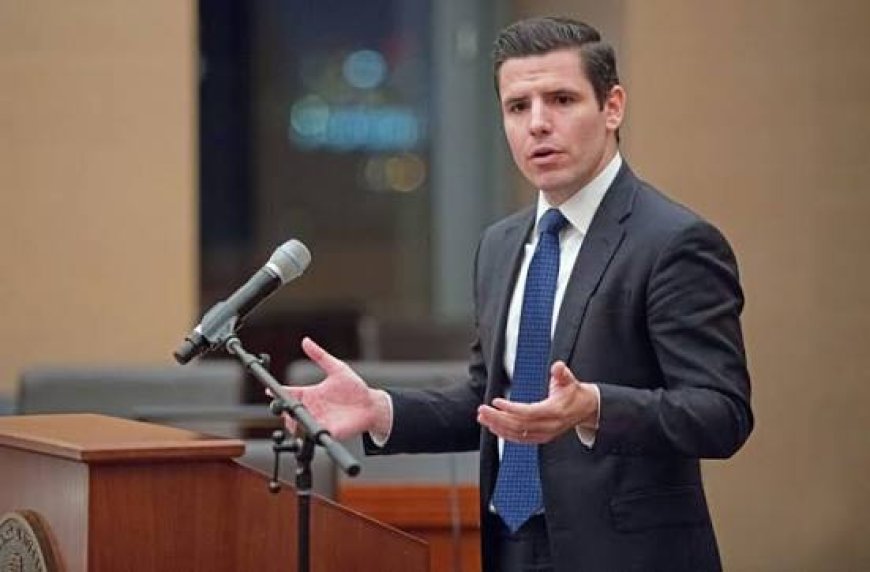
Assistant Attorney General Colin M. McDonald delivered a particularly direct message to suspected participants.
“Whether you're in Nebraska, New Jersey, Virginia, or Nairobi, we will pursue you and bring you to justice,” McDonald warned.
His statement signals that the investigation is not limited to people operating within American territory. Authorities are also looking at individuals and networks believed to be operating from Kenya.
There is an important distinction here: McDonald is the Assistant Attorney General heading the Justice Department's National Fraud Enforcement Division, not the US Attorney General.
HOW THE ALLEGED SCHEME WORKED
At the centre of the investigation is a system known as FAFSA, short for the Free Application for Federal Student Aid.
FAFSA is the official US government platform through which eligible students apply for federal financial assistance, including grants and student loans.
The programme is designed to help Americans access higher education, particularly those who cannot comfortably finance their studies.
According to investigators, fraudsters allegedly found a way to exploit this system.
Rather than enrolling genuine students, they allegedly obtained personal information belonging to real American citizens and used it to create fraudulent student identities.
These fictitious students were then enrolled in colleges and universities, allowing applications for government-funded education assistance to be submitted.
Once the money was disbursed, refunds were allegedly redirected into bank accounts controlled by members of the network.
Some of the money was subsequently transferred to associates outside the United States, including individuals connected to Kenya.
In other words, the alleged operation involved stealing real people's identities to create students who did not exist, enrolling those fictional students in legitimate institutions and extracting public funds through fraudulent applications.
Investigators also say some participants went further by using automated technology to complete coursework and maintain the appearance of genuine student participation.
THE FIVE DEFENDANTS AND THE AMERICAN CONNECTION
The Justice Department has announced charges against five defendants in cases spanning Nebraska, New Jersey and Virginia.
One of the publicly identified defendants is Francis Mogambi, a Kenyan citizen charged in Nebraska.
According to the indictment, Mogambi allegedly worked with associates in Kenya to obtain stolen American identities and use them to access federal student financial aid.
Prosecutors allege that between November 2025 and May 2026, he received approximately US$1,439,548 through more than 700 fraudulent student aid refund deposits.
He allegedly retained 30 per cent of the proceeds and transferred the remainder to associates.
The Nebraska indictment contains five counts of theft of government money and five counts of aggravated identity theft.
Mogambi was arrested and detained pending trial.
In New Jersey, three other defendants were charged: Mabed Patricia Utate-Alberto, Patricia Arisleydi Perez and George Arturo Alfau Mendez.
Prosecutors allege that the three worked with individuals in Kenya to obtain more than US$1 million in federal student assistance through fraudulent applications.
They allegedly received the funds through American bank accounts before transferring money overseas, after retaining their respective cuts.
Two Kenyan-based associates linked to a purported Kenyan safari company have also attracted investigators' attention. The Justice Department says it intends to pursue charges against those individuals as the investigation progresses.
A fifth defendant, a Kenyan national charged in Virginia, remains unnamed because the indictment is under seal.
That Virginia case involves an alleged US$1.4 million intended loss, with investigators claiming that more than 700 fraudulent student aid refund deposits passed through accounts controlled by the defendant.
It is important to note that criminal charges are allegations, not convictions. Every defendant remains presumed innocent unless proven guilty in court.
KENYA'S ROLE: DCI, ARA AND ODPP IN THE INVESTIGATION
One of the most significant developments is the involvement of Kenyan law enforcement agencies.
The US Justice Department has specifically acknowledged assistance from three Kenyan institutions:
- Directorate of Criminal Investigations (DCI).
- Asset Recovery Agency (ARA).
- Office of the Director of Public Prosecutions (ODPP).
The cooperation between the two countries has reportedly helped investigators trace financial transactions, identify individuals connected to the alleged network and recover cryptocurrency.
In September 2026, representatives of the US Justice Department and its partner agencies visited Kenya to discuss extradition, prosecution and the recovery of assets allegedly stolen from American taxpayers.
The involvement of Kenyan agencies suggests that this is not simply an American investigation into people living abroad. It is an active cross-border law enforcement operation.
THE KSH97.5 MILLION CRYPTOCURRENCY SEIZURE
The headline figure of KSh97.5 million refers to more than US$750,000 in cryptocurrency seized from an account belonging to a Kenyan national connected to the alleged fraud.
The Justice Department describes the recovery as the first international seizure of its kind in the history of its National Fraud Enforcement Division.
This is particularly significant because cryptocurrency transactions can cross international borders without relying on conventional banking channels.
However, cryptocurrency is not automatically anonymous. Investigators can follow transaction records, identify wallet movements and, where evidence permits, connect digital assets to individuals and financial accounts.
The seizure demonstrates how digital financial investigations are increasingly becoming part of international criminal enforcement.
THE BIGGER PICTURE: THIS COULD BE A US$200 MILLION PROBLEM
Perhaps the most concerning revelation is that the Kenyan-linked cases may represent only a small part of a much larger operation.
According to the US Justice Department, the wider ghost-student fraud problem is estimated to exceed US$200 million, equivalent to approximately KSh26 billion.
The FBI has separately identified more than US$32 million in losses from similar schemes, with investigators suspecting additional losses.
Even more striking, authorities identified 830,840 potentially fraudulent Federal Student Aid identification accounts associated with nearly US$130 million during September and October 2026.
The Department of Education was recommended to disable those accounts.
These figures require some context: the US$200 million is an estimate of the wider fraud problem, while the US$32 million represents losses identified by the FBI in similar schemes. The US$130 million relates to potentially fraudulent accounts, not confirmed theft.
The investigation is also not limited to the three states where the first charges were announced. The FBI says it has more than 40 open cases across 26 field offices, with referrals to federal prosecutors across the country.
Operation Ghostbusters is therefore a much wider investigation than the KSh97.5 million cryptocurrency seizure initially suggests.
WHY THIS MATTERS TO KENYA
There are several implications worth watching.
First, Kenya's financial institutions and digital asset ecosystem could face increased scrutiny as American investigators trace funds allegedly transferred across borders.
Second, individuals who may have participated in the alleged schemes could face criminal prosecution, asset recovery proceedings and possible extradition processes, depending on the evidence and applicable legal procedures.
Third, legitimate Kenyans studying, working or doing business in the United States should not be confused with individuals accused of fraud. The investigation concerns alleged criminal conduct, not Kenyan nationality itself.
There is also a wider question about identity theft. Some of the Americans whose personal information was allegedly used in these schemes may never have applied for student funding or even attended the institutions where they were supposedly enrolled.
For those victims, the consequences could extend beyond stolen money to fraudulent education records, financial complications and the difficult process of proving that they never applied for the loans.
WHAT HAPPENS NEXT?
The Justice Department says Operation Ghostbusters remains active and will continue working with Kenyan authorities to identify suspects, recover assets and pursue those believed to be involved.
The investigation could produce further arrests and charges as investigators examine financial records, cryptocurrency transactions and the alleged network of people operating across the two countries.
For now, the message from Washington is unmistakable: investigators intend to follow the money, regardless of where it leads.
And for anyone who believed that moving allegedly stolen American taxpayer funds to Nairobi would put them beyond the reach of US authorities, Operation Ghostbusters suggests otherwise.
UNBIASED PLANET ANALYSIS
The most interesting part of this investigation is not simply the amount of money recovered. It is how an education assistance programme designed to help ordinary students was allegedly turned into an international financial extraction scheme.
It also demonstrates something important about modern financial crime: the person submitting a fraudulent application, the person receiving the money, the person transferring it and the person holding cryptocurrency may all be in different countries.
The investigation is still developing. The public should therefore distinguish between those already charged, those being investigated and those whose identitie

s have not been disclosed.
One thing is certain: this story is far from over.
Sources: US Department of Justice, FBI and People Daily reporting.